
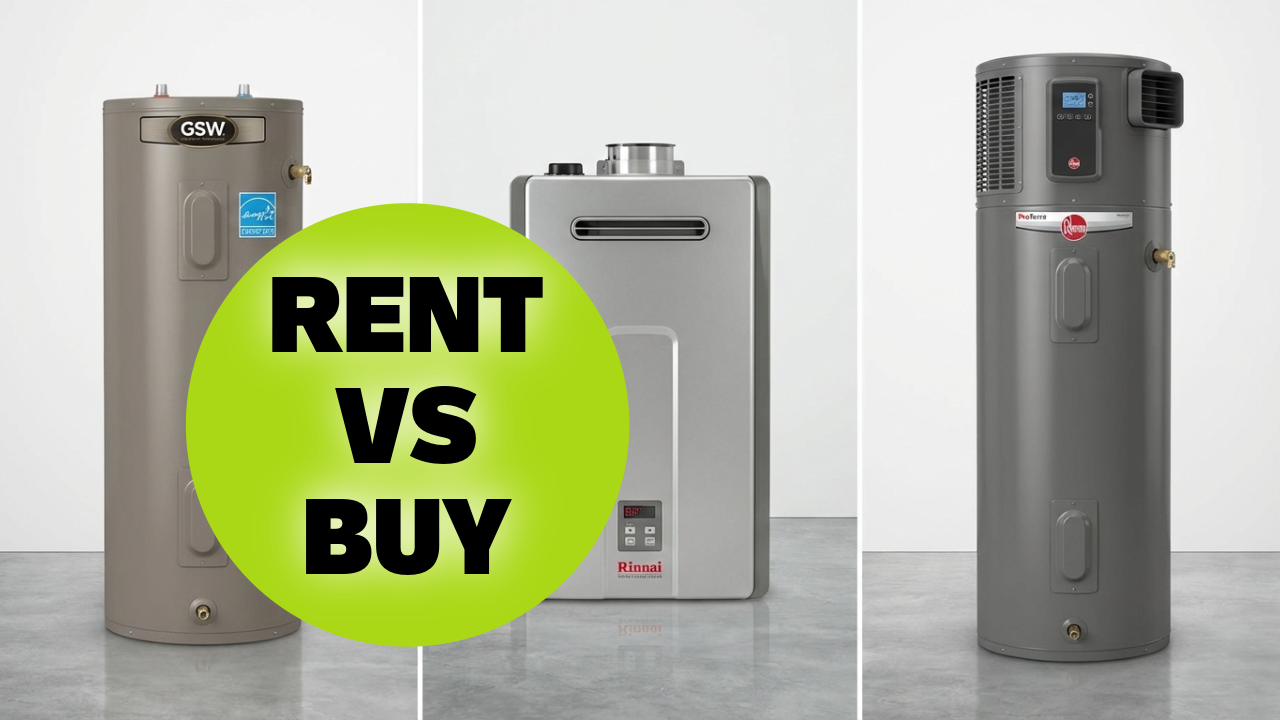
You know that the sound of a leaking water heater in the middle of the night is enough to cause a minor heart attack. It is the silent workhorse of your home, tucked away in a basement corner, providing the comfort of a hot shower on a freezing January morning. But when it comes time to replace it, most Ontarians face a uniquely Canadian question: Should I keep renting, or is it finally time to buy?
For decades, renting has been the "default" setting for homeowners in the GTA, Ottawa, and beyond. Large utility companies have spent millions on marketing to convince us that the "peace of mind" of a rental is worth the monthly fee. However, as 2026 brings new energy efficiency standards and shifts in the housing market, the math is changing.
In this guide, we will dive deep into the water heater rental vs. purchase. We’ll look at the real costs, the legal fine print, and the impact on your home’s resale value so you can make a choice that actually benefits your bank account.
The "Rental Culture"
Water Heater rental started decades ago when local utilities provided the tanks as a service. Today, private companies have taken over, but the habit remains. Many homeowners stick with a water heater rental because they believe they are protected against repair costs. While it’s true that a rental usually includes "free" service calls, you might be paying for that luxury three or four times over the life of the unit.
To ensure your installation meets provincial safety requirements, it is always best to consult the TSSA Safety Standards which govern fuel-burning appliances.
Breaking Down the Numbers: Buying vs. Renting
1. The Cost of Ownership
Buying a water heater requires an upfront investment, but it stops the "leak" in your monthly budget.
- Standard Gas Tank: Typically costs between $1,800 and $2,800 installed in Ontario.
- High-Efficiency Tankless: Can range from $3,500 to $6,500 depending on the complexity of the venting and gas line upgrades.
While these numbers seem high, the unit is yours. Once it is paid for, your monthly bill for hot water drops to zero (aside from the gas or electricity you use). Most modern tanks come with a 6-to-10-year warranty, covering the most critical years of the unit’s life.
2. The Cost of Renting
Rental rates are notorious for "creeping" upward. Most rental contracts include an annual price increase (often around 3.5%). Over a 15-year period, if you pay $35 a month, you’ve spent **$6,300** on a tank that would have cost you $2,000 to buy.
For many, HVAC financing through reputable companies like HVAC Ontario has become a popular middle ground. It allows you to pay a monthly amount similar to a rental, but with a clear end date where you eventually own the equipment.
2026 Price Comparison Chart (Estimated CAD)
Below is a breakdown of what a typical homeowner in the GTA or Golden Horseshoe can expect to pay over a 10-year period.
| Feature | Buying (Standard Gas) | Renting (Standard Gas) | Buying (Tankless) | Renting (Tankless) |
|---|---|---|---|---|
| Upfront Cost | $1,800 - $2,800 | $0 | $3,500 - $6,500 | $0 |
| Monthly Fee | $0 | $25 - $45 | $0 | $50 - $75 |
| 10-Year Total | $2,100* | $4,200 - $6,500** | $4,000* | $7,500 - $11,000** |
| Maintenance | Owner's responsibility | Included | Owner's responsibility | Included |
| Ownership | Immediate | Never (unless buyout) | Immediate | Never (unless buyout) |
*Includes estimated $300 for a mid-life service/repair. **Includes estimated 3.5% annual rental rate escalations.
Is the "Peace of Mind" a Myth?
The biggest selling point for rentals is that if the tank bursts, you just call a number and someone fixes it. But let’s look closer at that "fully covered" promise. When you own your water heater, you have the freedom to choose your own certified installer or repair technician.
When you rent, you are locked into the rental provider’s schedule. If they are backed up during a cold snap, you’re stuck waiting. Furthermore, many homeowners find that "free repairs" often come with caveats. If the venting isn't "up to current code," the rental company might refuse the repair until you pay for an expensive upgrade out of pocket. For professional advice on system health, residents in the East end often turn to Mersey Heating & Cooling for reliable inspections.
Impact on Home Resale Value
In the current real estate market, savvy buyers are becoming wary of "assumed contracts." If you are selling your home and have a water heater rental, the buyer must agree to take over your contract. If the contract is particularly expensive or has a high buyout cost, it can actually become a pointing in negotiations. Many buyers now prefer homes where the equipment is "owned," as it represents one less monthly bill to worry about. Ownership simplifies the transaction and adds tangible value to your property.
Energy Efficiency and 2026 Rebates
If you are looking to save on utility bills, 2026 is a great year to consider an upgrade. The Home Renovation Savings Program (HRS) in Ontario offers incentives for homeowners switching to high-efficiency systems.
- Heat Pump Water Heaters: These are incredibly efficient and can qualify for up to $500 in rebates through programs like the Enbridge Gas Rebates.
- Condensing Tankless Systems: These units capture waste heat from exhaust gases to improve efficiency.
By purchasing an Energy Star certified unit, you are not only saving on your monthly rental fee but also reducing your monthly gas or electricity consumption. You can check the latest federal incentives via the Canada Greener Homes Initiative to see if you qualify for low-interest loans or further grants.
Hard Water Challenge
Cities like Kitchener, Waterloo, and Guelph are famous for their hard water. Mineral buildup (scale) is the number one killer of water heaters in these regions. If you own your unit in a hard-water area, water heater maintenance is non-negotiable. You should flush your tank annually and check the anode rod every three years. If you rent, the company might handle the repairs, but they rarely perform the preventative maintenance that keeps the unit running efficiently.
When Renting Actually Makes Sense
Is renting ever the right choice? There are a few scenarios:
- Short-Term Living: If you plan to sell the house in less than two years, a rental avoids the large upfront hit.
- Cash Flow Constraints: If you absolutely cannot afford the upfront cost, a rental ensures your family has hot water today.
- Landlord Convenience: Some landlords prefer rentals so that tenants can deal directly with service providers like Reliance Home Comfort for repairs.
Breaking Free: The Buyout Option
If you are currently stuck in a rental and want to switch to ownership, you can request a buyout price. This price depends on the age of your unit. For a tank that is 10 years or older, the buyout might be as low as $100. Before you sign a new contract, always check the "termination clause" to ensure you aren't being locked into an auto-renewing cycle.
A Better Way Forward
Homeowners should look at their water heater as a long-term investment. By choosing to buy a water heater, you take control of your home’s efficiency and your long-term savings. For those in the downtown core or Oakville area, Dupont Heating & Air Conditioning offers specialized consultations to help you transition from a rental to an owned system.
The Bottom Line for Homeowners
Whether you choose a traditional gas water heater or a modern tankless water heater, the goal is reliability and cost-effectiveness. Take a moment to check your latest utility bill. If you see a line item for "Equipment Rental," do the math. You might find that the "peace of mind" you're paying for is the most expensive subscription you own. Invest in your home, own your equipment, and enjoy the comfort of hot water without the monthly "rental tax."