
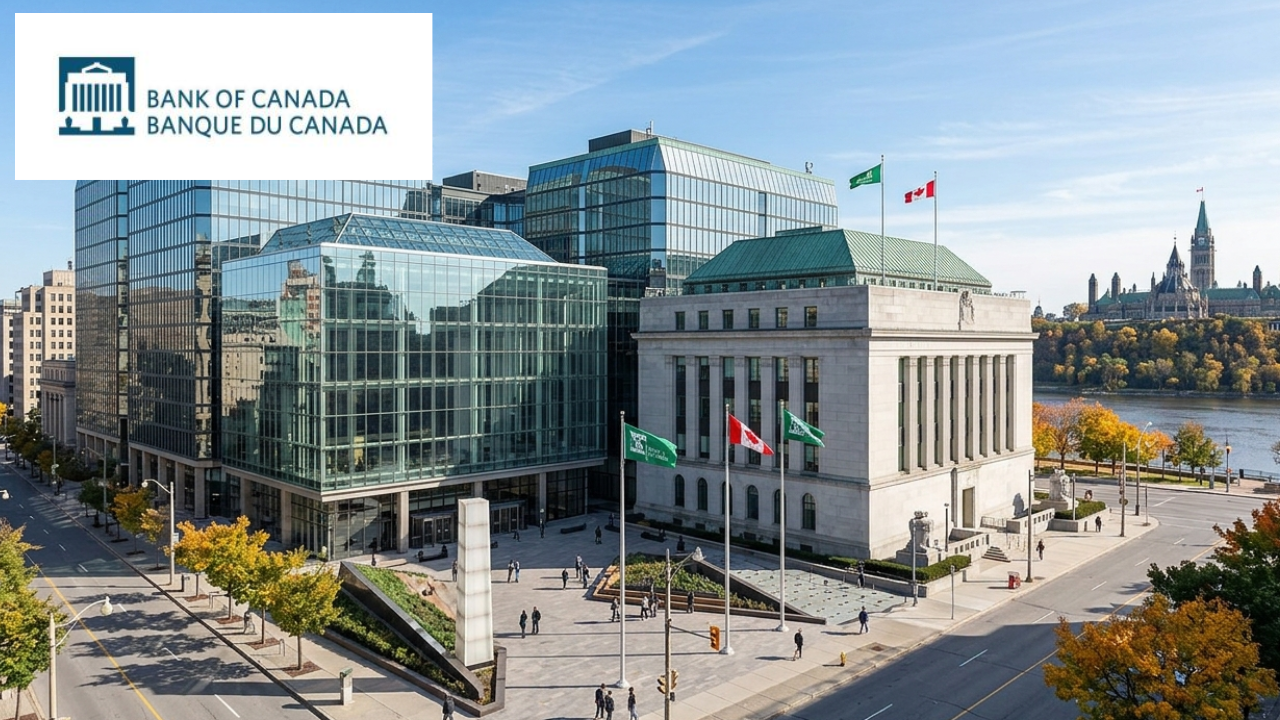
OTTAWA, ON — The Bank of Canada announced this morning that it is maintaining its target for the overnight rate at 2.25 per cent. In a decision that met widely-held market expectations, the central bank cited a "clouded" global economic landscape, balancing easing domestic inflation against escalating geopolitical tensions and trade uncertainties.
With the Bank Rate at 2.5 per cent and the deposit rate at 2.25 per cent, Governing Council signaled that while the Canadian economy is showing resilience, the path forward remains obstructed by external shocks.
Key Takeaways from the March 18 Announcement
- Policy Rate Hold: The overnight rate remains at 2.25%, a level held since January 2026.
- Inflation Progress: Annual inflation slowed to 1.8% in February, dipping slightly below the Bank’s 2% midpoint target.
- Labour Market Cooling: The unemployment rate rose to 6.7% in February, with a net loss of 84,000 jobs, indicating a softening in domestic demand.
- External Risks: The Bank specifically highlighted "choppy waters" caused by the conflict in the Middle East and potential volatility in oil prices.
- Trade Uncertainty: Ongoing jitters regarding the U.S. trade policy and the upcoming CUSMA (Canada-United States-Mexico Agreement) review continue to weigh on business investment.
Navigating Geopolitical and Trade Headwinds
Governor Tiff Macklem’s statement underscored a shift in focus from domestic price pressures to international instability. While the "tax holiday" effects from early 2025 have largely washed out of the inflation data, new risks have emerged.
The ongoing conflict in the Middle East has created a "global oil price shock" risk that could reignite inflationary pressures if energy costs spike. Furthermore, Canada’s economy continues to undergo a "structural adjustment" as it reacts to protectionist U.S. trade stances.
"Monetary policy is focused on keeping inflation close to the 2% target while helping the economy through this period of structural adjustment," the Bank stated in its official release. "Governing Council judges the current policy rate remains appropriate, conditional on the economy evolving broadly in line with the outlook."
The "Wait and See" Approach
Economists suggest the Bank is in a difficult position. On one hand, the cooling labour market and 1.8% inflation rate might justify a rate cut to stimulate growth. On the other hand, the U.S. Federal Reserve—which is also expected to hold rates steady today—is dealing with a more robust American economy, limiting how far the Bank of Canada can diverge without impacting the Canadian dollar.
The loonie has recently hovered around the 72-cent U.S. mark. A significant divergence from the Fed could lead to further currency depreciation, which would paradoxically drive up the cost of imported goods and fuel inflation.
What This Means for Canadians
For Canadian homeowners and businesses, today's "hold" provides a temporary sense of stability. Variable-rate mortgage holders will see no change in their monthly payments for now. However, the Bank’s cautious tone suggests that the era of "higher for longer" isn't over yet, as policymakers wait for the dust to settle on global trade and conflict.
The Bank of Canada’s next scheduled interest rate announcement is set for April 29, 2026, which will be accompanied by a full Monetary Policy Report (MPR) providing a deeper dive into the five-year economic forecast.
For more information and the full text of the press release, visit the official Bank of Canada website.