
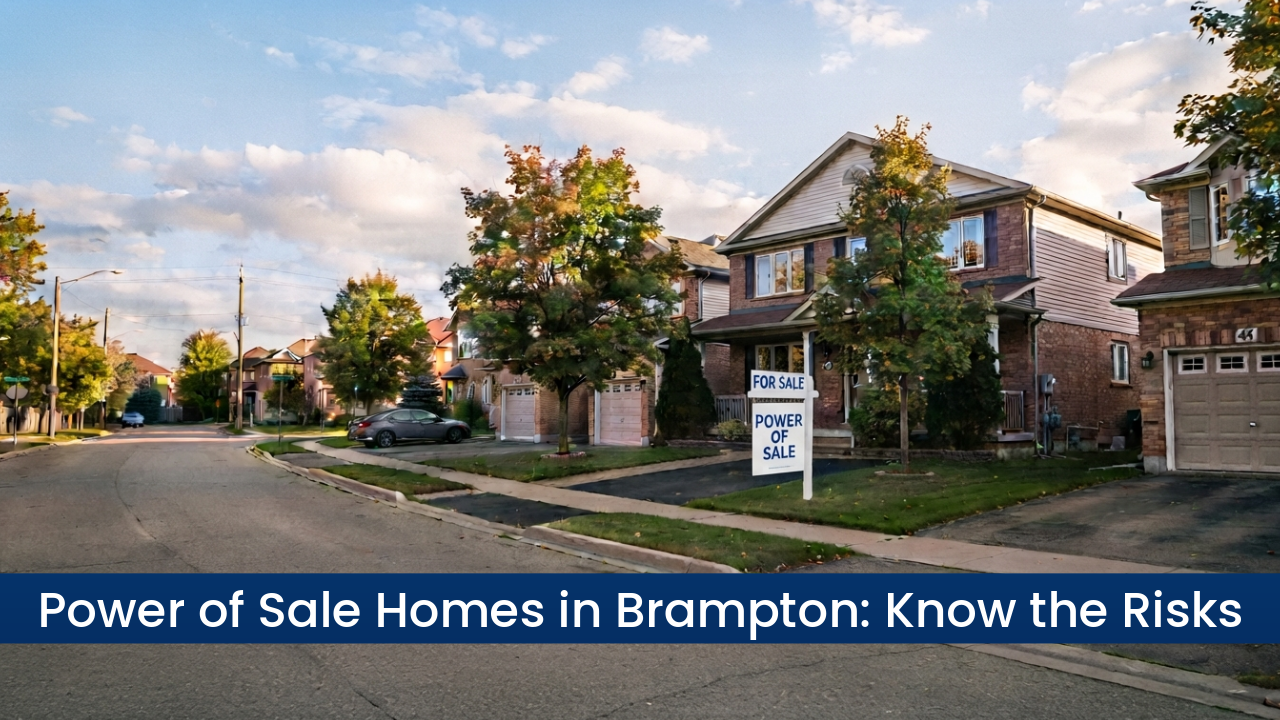
If you've been house hunting in Brampton, you've probably run into a listing marked "Power of Sale." Maybe it caught your eye because the price looked lower than everything else on the street. That's not an accident. A power of sale property in Peel Region isn't your average purchase, and the discount usually comes with strings attached.
I want to walk you through what this actually means, how it's different from foreclosure, what can go wrong, and what you can do to protect yourself if you decide to go for it anyway.
So What Exactly Is a Power of Sale?
Here's the short version. A homeowner falls behind on their mortgage. The lender, instead of dragging things through foreclosure, uses a faster legal process to sell the house and get their money back. In Ontario, this is called Power of Sale, and it's the route most banks take because it's quicker and cheaper for them.
The key difference is that with foreclosure, the lender takes ownership of the home outright. With a Power of Sale, the original owner still holds legal title until the sale actually closes. Once the home sells and the lender is paid what's owed, any leftover money goes back to that original owner.
Most Ontario mortgages include their own power of sale clause, letting the lender act sooner than the law's default timeline requires. Without that clause, the lender falls back on the Act's statutory power of sale, which follows a longer timeline.
That one detail: But the fact that the previous owner still technically retains ownership until the sale officially closes significantly impacts how cautious you need to be as a buyer. This detail means you must thoroughly investigate and assess the property, as you can't rely on the lender for insights into its history or condition. It adds layers of complexity to the purchase process, making it crucial to be diligent about inspections and legal matters to ensure you're well-informed and protected before proceeding with the transaction.
What Can Actually Go Wrong
The house is sold exactly “as is”
Nobody's fixing anything before you move in. The lender selling the home usually knows nothing about its history; they're not going to tell you the roof leaks or the furnace is on its last legs, because they genuinely don't know. Whatever's wrong with the place becomes your problem the day you close.
No promises about the title or the condition
In a typical home sale, you get some assurances: the seller promises the title is clean, the property is in the condition described, that kind of thing. Power of sale deals usually skip all of that. If there's a lien on the property or an unpaid tax bill hiding somewhere, that can become your headache to sort out after closing.
Someone might still be living there
Sometimes it's the previous owner, or sometimes it's a tenant, or even a family member who never left. If they don't move out on their own, getting them out can mean months of legal back-and-forth and costs you never budgeted for.
The closing date can move on you
Ontario law requires lenders to follow specific notice periods before a Power of Sale can go through. That means closing dates aren't always as firm as they'd be in a regular deal. If you need a guaranteed move-in date, this can be a real problem.
Questions Worth Asking Before You Make an Offer
Before you even think about writing an offer on a power of sale property in Brampton, sit down and go through a few questions with your agent and your lawyer.
How long has the property been vacant, if it's vacant at all? A home that's sat empty through a winter can have plumbing issues that only show up once someone turns the water back on. Has the listing agent disclosed anything at all about the home's condition, even informally? Sometimes agents know more than what's written down, and it's worth asking directly.
Is there a lien or unpaid property tax on the title? Your lawyer can run a title search early, before you're locked into an accepted offer, so you know what you're dealing with. And who exactly is living in the home right now, if anyone? Getting a straight answer here can save you from a drawn-out eviction process down the road.
None of these questions guarantee a smooth deal. But asking them upfront means fewer surprises after you've already signed on the dotted line.
How to Protect Yourself
Get a real estate lawyer involved early. Not after you've made an offer — before. A lawyer who's handled Power of Sale deals in Ontario will spot unusual clauses and title problems before they become your problem.
Push hard for a proper inspection. Even if access is limited, insist on getting a licensed inspector in there who's dealt with these kinds of sales before and knows what to look for in a home that hasn't been maintained.
Set aside extra money. Beyond your down payment and closing costs, keep a real cushion for repairs, legal fees, and delays. Don't spend it until you know you don't need it.
Ask your lawyer to confirm the timeline in writing. Find out exactly what notice periods apply to your specific deal so you're not caught off guard by a closing date that moves.
Walk the neighbourhood yourself. Don't rely only on the listing photos and the agent's description. Talk to neighbours if you can, check what you can find in municipal records, and get a feel for the street beyond what's in the listing.
Financing Can Be Trickier Too
One thing a lot of buyers don't think about until they're deep into the process: getting a mortgage on a power of sale property isn't always as simple as a regular purchase. Some lenders get nervous about "as is" sales, especially if the home needs obvious repairs or the appraisal comes back lower than the offer price.
It's worth talking to your mortgage broker early, before you fall in love with a listing. Ask them directly whether they've financed power of sale deals in Mississauga or Brampton before, and what kind of down payment or conditions they'd expect. Some lenders will want a higher down payment as a cushion against the unknowns. Others may ask for proof that any obvious repairs get handled before closing, which can complicate an already tight timeline.
Getting pre-approved with a lender who's comfortable with these deals can save you from losing a property because financing fell through at the last minute.
Is It Actually Worth It?
For some buyers, yes. If you've got cash reserves, experience with renovations, and enough flexibility to handle delays, a Power of Sale property in Peel Region can be a genuinely good move. If you're a first-time buyer working with a tight budget and a firm move-in date, the risks usually outweigh whatever you'd save.
There's no single right answer here. It depends on your finances, how much risk you're comfortable carrying, and the specific house you're looking at. What matters most is going in with your eyes open — read everything, ask your lawyer the uncomfortable questions, and don't let a good price rush you into a bad decision.
Bottom Line
A power of sale property in Peel Region, whether in Mississauga or Brampton, can be a great opportunity to buy into a neighbourhood at a lower price. However, these transactions come with unique legal and financial risks. By partnering with an experienced REALTOR®, a real estate lawyer, a professional home inspector, and budgeting for unexpected costs. You ensure you are making a calculated, informed investment rather than a gamble.
Helpful Resources
- Ontario.ca – Mortgages and Power of Sale — Government information on property law in Ontario.
- Real Estate Council of Ontario (RECO) — Guidance on working with licensed real estate professionals in Ontario.
- Canada Mortgage and Housing Corporation (CMHC) — Resources on mortgage default and homeownership.