
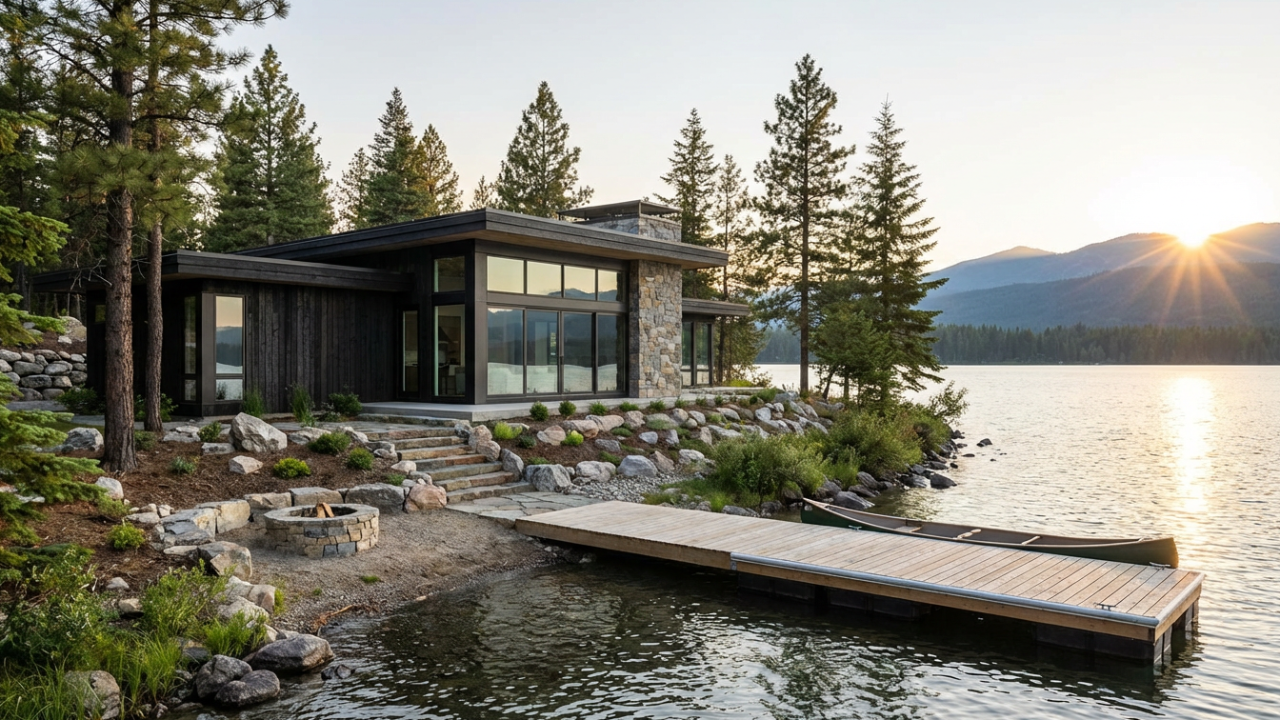
The ice is finally thawing across the province, the days are getting noticeably longer, and the 2026 Ontario cottage real estate market is officially kicking into gear. For many Canadians, escaping the city to own a piece of lakefront property in iconic regions like Muskoka, the Kawarthas, Haliburton, or Prince Edward County is the ultimate lifestyle dream.
However, buying a cottage is entirely different from purchasing a standard home in a suburban neighbourhood. A rural property comes with its own deeply unique set of rules, strict environmental regulations, and hidden maintenance costs that city dwellers rarely encounter. If you are preparing to dive into the recreational real estate market this spring, here is a comprehensive look at everything you need to be aware of before you sign on the dotted line.
1. Define Your "Why" and Your Driving Limit
Before you even look at a beautifully staged online listing, you need to be brutally honest about how you actually plan to use the property.
Are you looking for a quiet family sanctuary unplugged from the world, a lively place to entertain large groups of friends, or a property that can double as an income-generating short-term rental? Your answer will dictate the specific type of lake you should target. For instance, a small, motor-free lake is perfect for canoeing, paddleboarding, and quiet mornings, but it will severely disappoint a family that dreams of buying a speedboat and going wakeboarding.
Equally important is the drive. Real estate experts often stress the "two-hour rule." If a cottage takes more than two to three hours to reach from your primary home, you are significantly less likely to use it for quick weekend getaways. When calculating your true travel time, you must factor in the notorious Friday afternoon summer traffic on Highway 400 or the eastbound crawl on Highway 401.
Furthermore, consider your connectivity needs. If you plan to work remotely from the dock on Fridays, you need to verify the internet situation. While satellite internet services like Starlink have revolutionized rural connectivity, deeply forested valleys or specific island topographies can still create dead zones.
2. Financing and Insuring a Second Home Looks Different
If you already own a primary residence, securing a mortgage and insurance for a vacation property involves an entirely different set of mathematics.
Lenders inherently view second homes as a higher financial risk. The logic is simple: if finances get tight, people will default on their vacation home long before they default on their primary residence. Because of this, you will typically need a minimum down payment of 20% for a seasonal property. If the cottage lacks a permanent foundation, relies on a holding tank rather than a full septic system, or lacks year-round road access, some lenders may demand an even larger down payment or charge higher interest rates.
You also need to account for closing costs. Just like any real estate transaction in the province, you will need to pay the provincial land transfer tax. You can use the official Ontario Ministry of Finance Land Transfer Tax guidelines to calculate exactly what this will cost you based on the purchase price.
Insurance is another major hurdle. Cottage insurance is notoriously expensive. Because rural properties are often far from municipal fire hydrants and rely on volunteer fire departments, the risk of a total loss in the event of a fire is high. Island properties or cottages with older electrical panels may require specialized, high-premium insurance policies.
3. The Hidden Underground: Septic Systems
When you buy a home in the city, you rarely think about where the wastewater goes when you flush the toilet. When you buy a cottage, your septic system instantly becomes one of your most important—and potentially most expensive—assets.
Septic systems have a strictly regulated legal capacity and a finite lifespan. If a cottage is listed as a three-bedroom property, the septic system must legally be sized to handle the wastewater specifically for those three bedrooms. You cannot simply build an addition or throw up a bunkie for extra summer guests without verifying that your system can handle the increased load.
Under the Ontario Building Code, property owners are strictly responsible for their septic system's performance. Failing systems can leak harmful bacteria like E. coli directly into the lake, ruining the water quality for the entire community. Replacing a failing system is a massive undertaking; depending on soil conditions and property access, installing a new conventional septic system in Ontario can easily cost between $15,000 and $30,000, while advanced tertiary systems for difficult lots can exceed $50,000.
Before you buy, you must make a professional septic inspection a condition of your offer. You should also verify if the local Conservation Authority has strict setback rules. If an old system is sitting too close to the water, environmental regulations may forbid you from rebuilding it in its current location.
4. Well Water, Lake Water, and Winterization
Your cottage will likely get its drinking water from a drilled well, a dug well, or by drawing water directly from the lake.
If the property draws water from the lake, that water must pass through a rigorous filtration and ultraviolet (UV) purification system to be rendered safe for human consumption. These UV bulbs require annual replacement, and the filters need frequent changing. If the property uses a well, you need to ensure both the flow rate (how many gallons the well produces per minute) and the water quality are sufficient.
Never take a seller's word that the water is perfectly safe. As a buyer, you should always test the water during the inspection period. The provincial government provides excellent resources for rural homeowners to test their drinking water for bacterial contamination entirely for free; you can learn exactly how to access these testing kits through Public Health Ontario.
If you plan to use the cottage in the winter, you also need to ask about winterization. Are the water lines buried below the frost line? If they are drawn from the lake, are they equipped with a heated trace line so the pipes do not freeze and burst in January? Repairing burst pipes in a rural setting is a headache no new owner wants to face.
5. You Might Not Own the Water (or the Shoreline)
One of the biggest and most jarring surprises for first-time cottage buyers is discovering they do not actually own the water, and they might not even own the land directly touching it.
In Ontario, the land under the water is considered Crown Land. This means you cannot simply decide to dredge the shoreline to make a sandy wading beach, dump rock fill into the water, or build a massive two-story boathouse without government permission. Activities that alter the shoreline are heavily regulated to protect fish habitats, prevent erosion, and maintain the natural ecosystem. If you want to make changes to the waterfront, you will likely need to navigate complex permits under the Ministry of Natural Resources guidelines for public lands.
Furthermore, many cottage properties are subject to a "Shoreline Road Allowance" (SRA). This is a 66-foot strip of land directly abutting the water's edge that was originally reserved by the government in the late 19th century for logging roads. In many cases, the local municipality still technically owns this strip of land between your cottage and your dock. If the previous owners never formally purchased this allowance from the township, you are technically trespassing on municipal land when you sit by the water. Closing and purchasing an SRA is a lengthy legal process that involves surveyors, lawyers, and municipal fees, so always ask your agent if the shoreline road allowance is owned.
6. Access: Year-Round vs. Seasonal vs. Island Living
Cottages are generally split into three distinct access categories, each dictating how and when you can use the property.
Year-Round Access: These cottages sit on roads plowed and maintained by the municipality. They are built for all four seasons, featuring proper insulation, heated water lines, and a winterized foundation. They command the highest premium in the real estate market but offer the most flexibility for things like Christmas getaways or winter snowmobiling trips.
Seasonal Road Access: Many classic Ontario cottages sit on private or unassumed roads. The local municipality does not plow these roads in the winter, nor do they grade them in the spring. Private road maintenance is usually managed by a local road association, which will charge you an annual fee. If you want to use the cottage in the dead of winter, you will likely have to park your vehicle out on a main road and snowmobile or snowshoe your way in.
Water-Access Only: Island cottages or mainland properties without road access are incredibly peaceful, private, and often more affordable upfront. However, they come with logistical hurdles. You are required to own a reliable boat, secure mainland parking, and rent a boat slip at a local marina. You also cannot use the cottage during the "shoulder seasons"—the unpredictable weeks in late fall when the ice is forming, and the weeks in early spring when the ice is breaking up—because the water is entirely unsafe to cross. Furthermore, any renovations on an island require barging in materials and tradespeople, which drastically inflates construction costs.
7. The Essential Wood Stove and WETT Inspections
Nothing says "cottage country" quite like curling up beside a crackling wood stove on a chilly autumn evening. However, wood-burning appliances are a major point of friction in rural real estate transactions.
If a cottage features a wood stove or a wood-burning fireplace, your insurance company will almost certainly demand a WETT (Wood Energy Technology Transfer) inspection before they agree to insure the property. A certified WETT inspector will evaluate the stove to ensure it meets the Ontario Building Code, checking critical details like the distance to combustible walls, the integrity of the flue pipe, and the condition of the chimney.
Many older, charming cottages feature DIY stove installations that completely fail modern WETT standards. If a stove fails the inspection, you may be required to replace the entire unit, install expensive heat shields, or rebuild the chimney before you can legally insure and use the property. Always make a successful WETT inspection a standard condition in your purchase offer.
8. The Reality of Short-Term Rentals in 2026
Many buyers plan to rent out their cottage on platforms like Airbnb or VRBO to help offset the steep costs of ownership. While this can be a smart financial strategy, it is no longer as simple as tossing up an online listing and waiting for the bookings to roll in.
Across Ontario, municipalities have cracked down aggressively on short-term rentals to protect the quiet enjoyment of their lakes and prevent rural neighbourhoods from turning into unregulated hotel zones. Throughout 2025 and into 2026, townships spanning from the Kawarthas to Muskoka Lakes have implemented mandatory, highly regulated short-term rental licensing programs.
These bylaws often limit the exact number of nights you can rent the property per year and enforce strict noise curfews. More importantly, municipalities now actively link occupancy limits to your septic capacity. If your septic system is rated for six people, your rental licence will strictly cap your guests at six. Furthermore, you may be required to collect a Municipal Accommodation Tax (MAT) from your guests, and if your renters break a local noise or fire bylaw, the hefty fine goes directly to you, the property owner. Before banking on rental income to pay your mortgage, deeply research the specific municipal bylaws of the township you are buying in.
9. Navigating the Bidding Process
The wild, sight-unseen bidding wars of the pandemic era have largely cooled down. The 2026 recreational market is much more balanced, giving buyers the essential breathing room needed to actually inspect properties, review surveys, and assess water quality before making the biggest purchase of their lives.
However, highly desirable waterfront properties—those with highly coveted western sunset views, sandy weed-free beaches, and easy year-round access—will always attract intense interest. It is absolutely crucial to work with a local real estate agent who specializes strictly in waterfront properties. A city agent might not know what to look for, but a local expert will know exactly which lakes have historic issues with blue-green algae blooms, which private roads flood every spring, and which shallow bays turn into a muddy marsh by late August.
Your Next Steps Toward Lakefront Living
Buying a cottage in Ontario is a thrilling, life-changing milestone. It is an investment not just in real estate, but in your family's future memories, lazy summer afternoons reading on the dock, and peaceful morning coffees watching the mist rise off the water.
By taking the necessary time to understand the deeply unique realities of rural properties—from septic system maintenance and Crown Land shoreline rules to WETT inspections and road associations—you aggressively protect yourself from stressful and costly surprises. Take full advantage of the current, more balanced real estate market to do your homework, schedule those crucial professional inspections, and confidently find the perfect lakeside retreat that you and your family will enjoy for decades to come.