
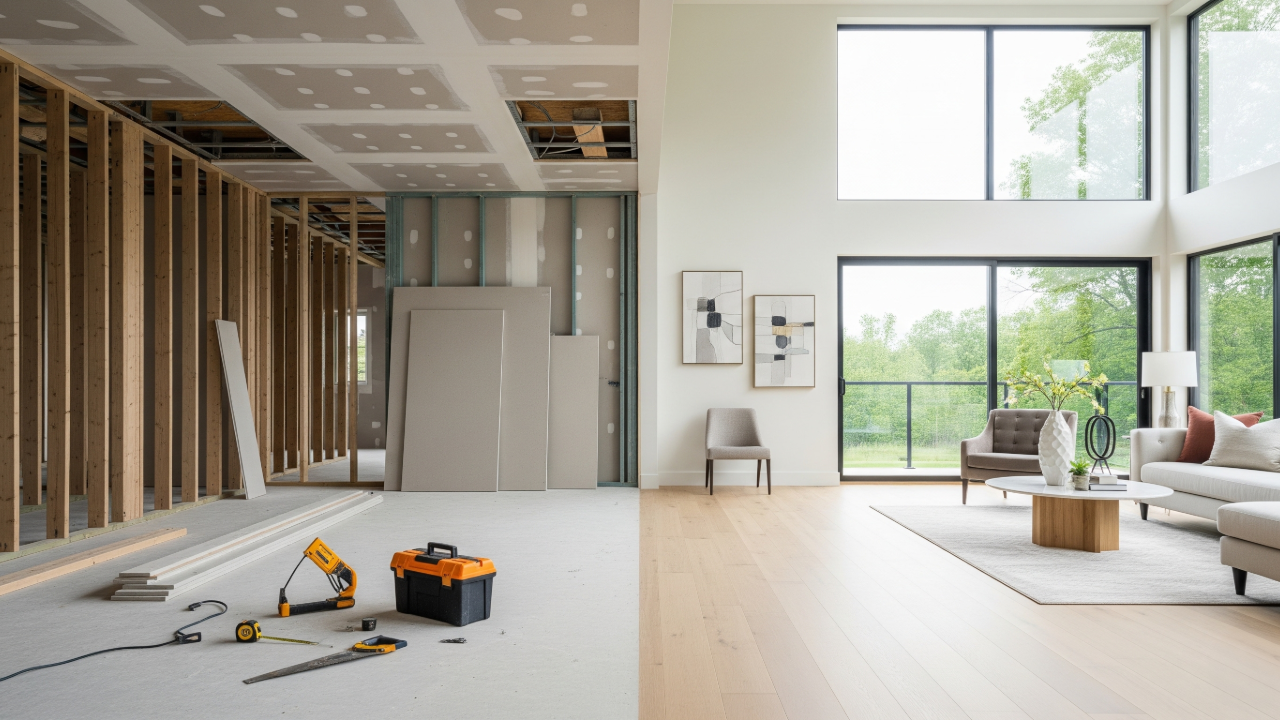
For property owners in Ontario—ranging from residents of historic urban centres like Toronto to those in the expanding suburban developments of the Greater Toronto Area or the recreational regions of Muskoka—home improvement is a significant undertaking. While the terms "renovation" and "remodelling" are frequently used interchangeably in casual conversation, they represent distinct construction processes with varying implications for project management, regulatory compliance, and long-term financial planning.
In the professional spheres of contracting, architecture, and property assessment, these terms denote specific levels of intervention. Understanding the technical differences is essential for establishing accurate budgets, securing necessary municipal permits, and maximizing the eventual return on investment (ROI).
Defining the Scope of Work
The distinction between a renovation and a remodel is primarily defined by the degree of structural and functional change involved in the project. Failing to distinguish between the two can lead to significant budgetary overruns and legal complications with local building departments.
The Nature of Renovation
The term "renovation" refers to the process of restoring a structure to a better state of repair. It is fundamentally an aesthetic and functional refresh that maintains the original purpose and layout of a space. When a room is renovated, the primary objective is to modernize the appearance and rectify any existing wear and tear without altering the "bones" or the fundamental footprint of the building.
In Ontario’s older housing stock, renovations often focus on reversing the effects of aging, such as repairing plaster cracks in century homes or updating 1970s-era cabinetry. For instance, a kitchen project that involves replacing outdated cabinetry, installing contemporary quartz countertops, and applying fresh paint—while strictly maintaining the existing locations of the sink, stove, dishwasher, and electrical outlets—is classified as a renovation.
The Nature of Remodelling
Remodelling involves a fundamental transformation of the structure, flow, or function of a space. This process often necessitates significant changes to the building's footprint, internal layout, or core mechanical systems, such as plumbing stacks, HVAC ductwork, and electrical mains. It is a more invasive process that reimagines how the home is used.
A project that requires the removal of a load-bearing wall to create an open-concept living area, or the conversion of a previously unfinished basement into a legal secondary suite with its own kitchen and bathroom, constitutes a remodel. These projects typically require professional design services, architectural drawings, and structural engineering to ensure the house remains stable once original supports are removed or relocated.
Strategic Considerations for Renovation
Renovations are the most frequent type of residential project in Ontario, often initiated to increase property value prior to a listing or to modernize a home that has become aesthetically dated.
Advantages of Renovation
- Cost Efficiency: Since renovations typically do not require the relocation of major mechanical systems or significant structural modifications, labour and material costs remain more predictable and manageable.
- Expedited Timelines: Renovations often follow a linear, predictable schedule. A standard bathroom refresh, for example, may be completed within ten business days, whereas a remodel could extend into months of disruption.
- Risk Mitigation: Maintaining the existing structure reduces the likelihood of encountering unforeseen issues behind walls or under flooring. In many Ontario homes, "opening up walls" can reveal expensive problems like knob-and-tube wiring or historical structural "hacks" that must be brought to modern code.
- Feasibility for Self-Performance: Many renovation tasks, such as painting, tiling, or installing trim, are suitable for homeowners with moderate technical skills, allowing for significant savings on labour costs.
Prevalent Renovation Projects in Ontario
- Aesthetic Refinement: Professional interior painting and the replacement of millwork, baseboards, and crown moulding to modernize older interior spaces.
- Flooring Restoration: Refinishing original maple or oak hardwood floors—common in many Ontario bungalows—or installing contemporary luxury vinyl plank (LVP) for improved durability.
- Component Upgrades: Replacing plumbing fixtures, such as faucets and toilets, and updating light fixtures to improve both energy efficiency and visual appeal.
- Exterior Maintenance: Updating vinyl or fibre-cement siding and replacing windows to enhance the building envelope, which is critical for protecting the structure from the freeze-thaw cycles of the Ontario climate.
Strategic Considerations for Remodelling
Remodelling is often the preferred path for homeowners who intend to remain in their current residence for a decade or more but find the existing layout insufficient for contemporary living standards or growing families.
Rationale for Remodelling
- Customization of Living Space: Remodelling allows a property to be tailored to the specific lifestyle requirements of the inhabitants, such as creating a dedicated home office or a professional-grade chef's kitchen.
- Correction of Architectural Deficiencies: Structural changes can address fundamental issues that a simple renovation cannot, such as poor natural light distribution, lack of ceiling height, or inefficient traffic flow in "chopped-up" floor plans.
- Long-term Equity Building: While the initial capital expenditure is higher, significant remodels—such as second-storey additions or floor plan reconfigurations—can move a property into a higher market bracket.
- Generation of Rental Income: Given recent provincial legislative changes in Ontario (such as the More Homes Built Faster Act, 2022) encouraging "gentle density," remodelling to add accessory dwelling units (ADUs) or garden suites has become a premier investment strategy for homeowners. For more details on these regulations, property owners should review the Ontario secondary suites guide.
Regulatory Compliance and Municipal Permits
In the province of Ontario, the Building Code Act, 1992 dictates the legal requirements for construction. Compliance is mandatory to ensure life safety, fire protection, and structural integrity.
Projects Generally Exempt from Permits
In most Ontario municipalities, simple renovations do not require a building permit, provided the work does not affect the structural or life safety systems. Examples include:
- Replacing windows and doors (provided the opening size remains unchanged).
- Installing new flooring, kitchen cabinetry, or bathroom vanities.
- Standard roof shingle replacement.
- Minor "like-for-like" repairs to existing plumbing or electrical systems.
Projects Requiring Mandatory Permits
Remodelling projects almost universally require municipal approval and inspections. A permit is typically necessary for:
- Altering, moving, or removing any walls (especially load-bearing ones).
- Installing new plumbing lines or relocating existing drainage and venting systems.
- Constructing additions, sunrooms, or large exterior decks (usually those over 24 inches above grade).
- Converting non-habitable spaces, such as garages or unfinished basements, into habitable living areas.
Property owners can find comprehensive details on the Ontario Building Code updates to ensure their plans meet current provincial standards. Proceeding without the required permits may result in "Order to Comply" notices, significant legal penalties, and complications during future property transfers.
Financial Planning and Investment Outlook
Project costs in Ontario vary significantly by region, influenced by local labour markets, the availability of specialized trades, and material transportation costs. The Greater Toronto Area (GTA) typically experiences the highest premiums in Canada.
Estimated Investment Brackets
- Bathroom Renovation: $10,000 – $25,000 (standard fixtures and finishes).
- Kitchen Renovation: $25,000 – $55,000 (cosmetic updates and new appliances).
- Structural Remodel (per square foot): $150 – $350 (highly dependent on complexity).
- Secondary Suite Conversion: $80,000 – $140,000 (due to fire-rating and egress requirements).
Homeowners must also account for the 13% Harmonized Sales Tax (HST) when evaluating contractor quotations. It is standard practice in Ontario for professional contractors to quote "plus HST," which can add thousands of dollars to the final project cost.
Return on Investment (ROI)
Renovations often yield a higher immediate ROI because they cost less to implement and directly address "curb appeal" or "first impression" factors. Conversely, remodelling is viewed as a long-term investment. While a $100,000 remodel may only add $70,000 in immediate market value, the utility and rental income potential over five to ten years often far outweigh the initial deficit.
Climate Adaptation and Energy Efficiency
Ontario’s climate is characterized by extreme seasonal temperature fluctuations, from -30°C in winter to +30°C with high humidity in summer. This necessitates a focus on the building envelope in every project.
During a renovation, property owners should prioritize sealing air leaks around baseboards and outlets and upgrading to high-performance, double- or triple-pane windows. During a remodel, the exposure of the building’s interior structure provides an ideal opportunity to replace old fibreglass insulation with modern mineral wool or spray foam. Homeowners can explore federal incentives for these upgrades through the Canada Greener Homes Initiative.
Summary and Strategic Recommendations
Ultimately, the choice between renovation and remodelling is a strategic one. It requires a balanced analysis of the property’s current physical deficiencies, the owner's long-term financial goals, and the reality of the local Ontario real estate market. While renovations provide a cost-effective method for aesthetic enhancement and maintenance, remodelling offers the only true path to fundamentally re-envisioning the home’s potential. Regardless of the scope, successful execution depends on thorough planning, a clear understanding of the Ontario Building Code, and the partnership of qualified, insured professionals who understand the unique challenges of the Canadian residential landscape.