
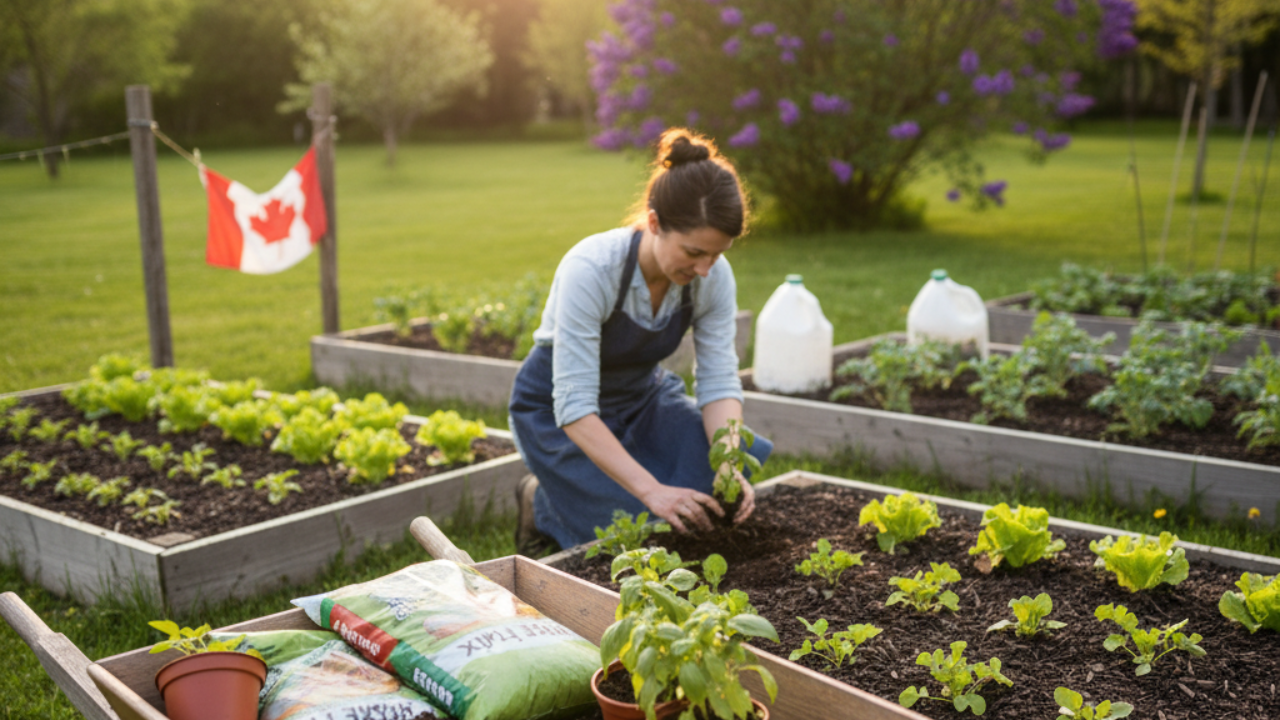
May in Ontario is a whirlwind. One day you’re wearing a parka to rake the remains of last year’s leaves, and the next, you’re in a t-shirt wondering if it’s finally time to commit those tomato seedlings to the earth. For Canadian gardeners, May is the ultimate "bridge" month—a high-stakes transition where patience is rewarded and rushing can lead to heartbreak.
Whether you are gardening in the humid heat of Windsor, the urban microclimates of Toronto, or the slightly shorter growing seasons of Ottawa and Sudbury, May is when the real work happens. This guide will walk you through the essential tasks, planting schedules, and local wisdom needed to make your Ontario garden thrive this year.
The Victoria Day Benchmark: Myth and Reality
In Ontario, the Victoria Day long weekend is the traditional benchmark for planting. For generations, grandmothers and garden centres alike have warned: Don't put your tender plants out until the long weekend.
Is this still true? Mostly. While climate patterns have shifted and southern regions like Niagara often see their last frost in late April, the risk of a "freak frost" remains a reality across most of the province until late May.
The Strategy: Use May as a two-phase month.
- Phase 1 (Early May): Focus on "Cool-Season" crops that laugh at a bit of frost.
- Phase 2 (Post-Victoria Day): Unleash the "Heat-Lovers" like tomatoes, peppers, and basil once nighttime temperatures consistently stay above $10^\circ C$.
Phase 1: The Early May Jumpstart
Don't wait for the holiday to start everything. There are plenty of hardy plants that actually prefer the cool, damp weather of early May in Ontario.
1. Cool-Weather Veggies
You can direct-sow seeds for peas, spinach, kale, radishes, and lettuce as soon as the soil can be worked (meaning it’s no longer frozen or a muddy swamp). Root vegetables like carrots and beets can also go in now. These plants are tough; a light dusting of frost might actually make your kale and spinach taste sweeter.
2. Soil Preparation: The "Gold" Standard
Before you plant a single seed, feed your soil. Ontario soil varies wildly—from the heavy clay of Peel Region to the sandy loams of Norfolk County.
- The Triple Mix Trick: Top-dress your beds with $5-8\text{ cm}$ (2-3 inches) of high-quality compost or "triple mix" (a blend of topsoil, peat moss, and composted manure).
- Avoid Compaction: If the soil is still soaking wet from the spring thaw, stay off it! Walking on wet garden beds squishes out the air pockets, leaving you with "bricks" once the summer sun hits.
3. Dividing Perennials
Early May is the perfect time to play "Musical Chairs" with your perennials. If your Hostas, Daylilies, or Sedums are looking overcrowded or have a "dead hole" in the centre of the clump, dig them up. Use a sharp spade to slice them into sections and replant them elsewhere. It’s the cheapest way to get a full-looking garden.
Phase 2: The Mid-May Transition
By mid-month, the birds are back in full force, and the local nurseries are teasing you with rows of beautiful, flowering annuals.
1. Hardening Off: The Vital Step
This is where many beginner gardeners fail. If you bought a tomato plant from a cozy, climate-controlled greenhouse and stick it directly into your breezy backyard, it will go into shock. Its leaves may turn white (sunscald) or the plant might simply stop growing.
- The Process: Over 7 to 10 days, move your plants outside for increasing intervals. Start with two hours in a shaded, sheltered spot, then gradually move them into more sun and wind each day. Bring them in at night if it’s chilly.
2. Lawn Care (Without the Chemicals)
If you missed the window in April, early-to-mid May is your second-best chance to overseed.
- No-Mow May? You might have heard of the movement to leave your lawn long in May to help pollinators. While noble, if you choose to mow, set your blade high (about $7.5\text{ cm}$). Longer grass shades its own roots, conserves moisture, and prevents weed seeds from germinating.
3. Pruning Spring Bloomers
Timing is everything. If you have shrubs like Forsythia or Lilacs, wait until after they finish blooming to prune them. If you prune them in early May, you’re cutting off this year’s flower buds.
Phase 3: The Long Weekend Grand Finale
Once the Victoria Day weekend arrives and the 14-day forecast looks stable, it’s "Go Time."
1. Planting the "Big Three": Tomatoes, Peppers, and Cucumbers
These are the kings of the Ontario summer garden, but they are incredibly sensitive to cold soil.
- Pro Tip: If you’re planting tomatoes, bury them deep—right up to the first set of leaves. They will grow extra roots along the buried stem, leading to a much stronger plant.
- Mulching: Once the soil has finally warmed up (usually by the end of May), apply a thick layer of mulch. This is your best defence against the humid Ontario summers, as it keeps the roots cool and prevents soil-borne diseases from splashing onto your leaves during heavy rainstorms.
2. Container Gardening
For those in condos or with smaller patios, May is the month to build your containers. Remember the "Thriller, Filler, Spiller" rule:
- Thriller: A tall, dramatic plant (like Canna Lilies or Dracaena).
- Filler: Mounding plants (like Petunias or Geraniums).
- Spiller: Something that trails over the edge (like Bacopa or Sweet Potato Vine).
Dealing with Ontario Pests
In May, you aren't the only one excited about the garden.
- Slugs: The damp spring weather is paradise for slugs. Use crushed eggshells or copper tape to protect vulnerable young shoots.
- The "Midnight Buffet": Raccoons and squirrels love to dig up freshly turned soil. If you find your seedlings tossed aside, try sprinkling some cayenne pepper or using a light bird netting over the bed until the plants are established.
A Note on the "New Normal"
Ontario’s weather has become increasingly unpredictable. We’ve seen $30^\circ C$ heatwaves in May followed by frost warnings three days later.
- The "Cloche" Solution: Keep some old milk jugs (with the bottoms cut off) or specialized frost blankets handy. If the Weather Network issues a frost advisory in late May, you can quickly cover your tender babies and save your hard work.
Growing Forward
Gardening in Ontario is a lesson in resilience. It’s about working with the rhythm of the Great Lakes and the Canadian Shield. While the holiday weekend is a helpful guide, your best tool is your own observation. Watch your local trees; when the Oak leaves are the size of a squirrel’s ear, the soil is usually warm enough for most things.
Spend your May getting the foundation right—good soil, properly hardened plants, and a bit of patience—and you’ll be reaping the rewards until the first snowflakes fly in October.